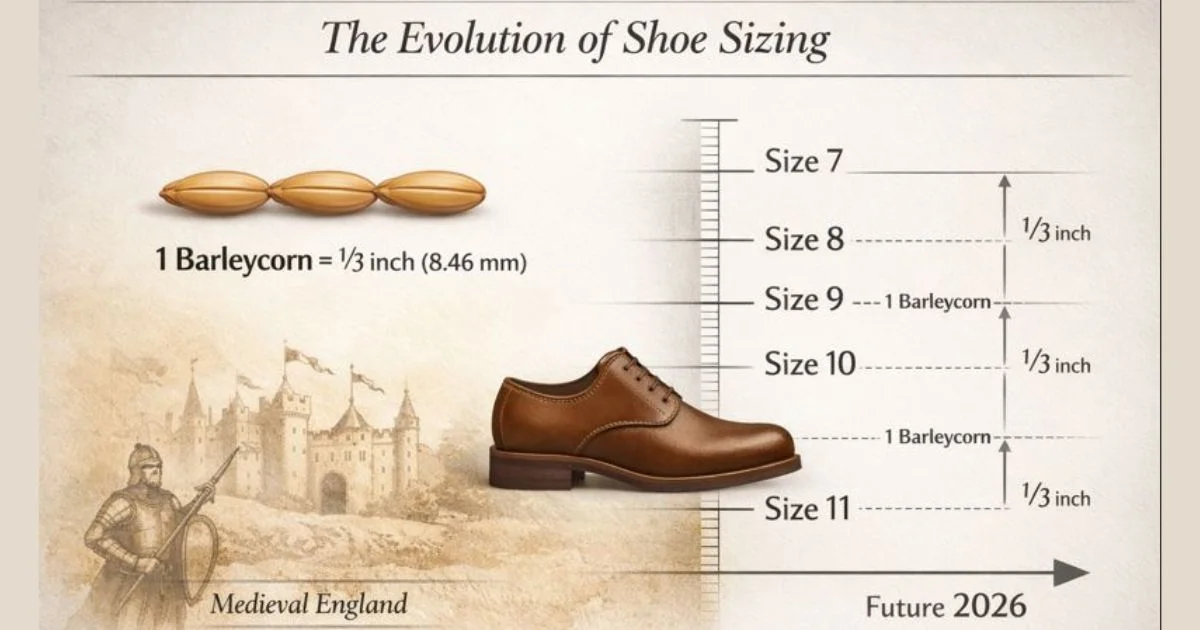
Ever wonder why shoe sizes jump in weird increments? The answer lies in a medieval grain of barley. This tiny seed became the foundation of how we measure shoes today.
The barleycorn measurement system dates back to 1324 England. King Edward II made it official. Three grains of barley, laid end to end, equal one inch. This simple standard revolutionized footwear sizing across the globe.
How Barleycorn Measurement Works in Modern Shoe Sizing
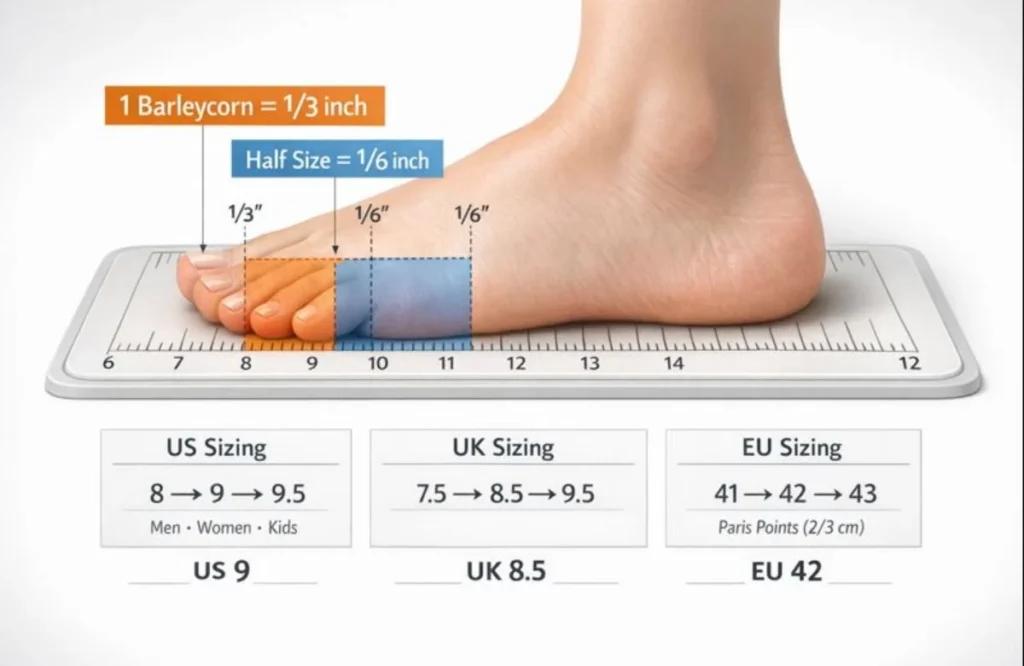
American shoe sizes follow a straightforward barleycorn formula. Each full size up equals one barleycorn or 1/3 inch longer. Half sizes add approximately 1/6 inch (half a barleycorn).
Children’s sizing starts at zero when a foot measures about 3.67 inches. Adult men’s sizing begins after children’s size 13. Women’s sizes run 1.5 sizes smaller than men’s for the same foot length.
British shoe sizes work similarly but start at a different baseline. The UK system begins at size zero for a smaller infant foot. This creates slight differences—a UK size 8 equals a US men’s size 8.5.
European sizing abandoned barleycorns entirely. They measure in Paris Points—each equals 2/3 centimeter. A European size 42 equals roughly a US men’s size 9. This metric system approach creates confusion when shopping internationally.
The Accuracy and Limitations
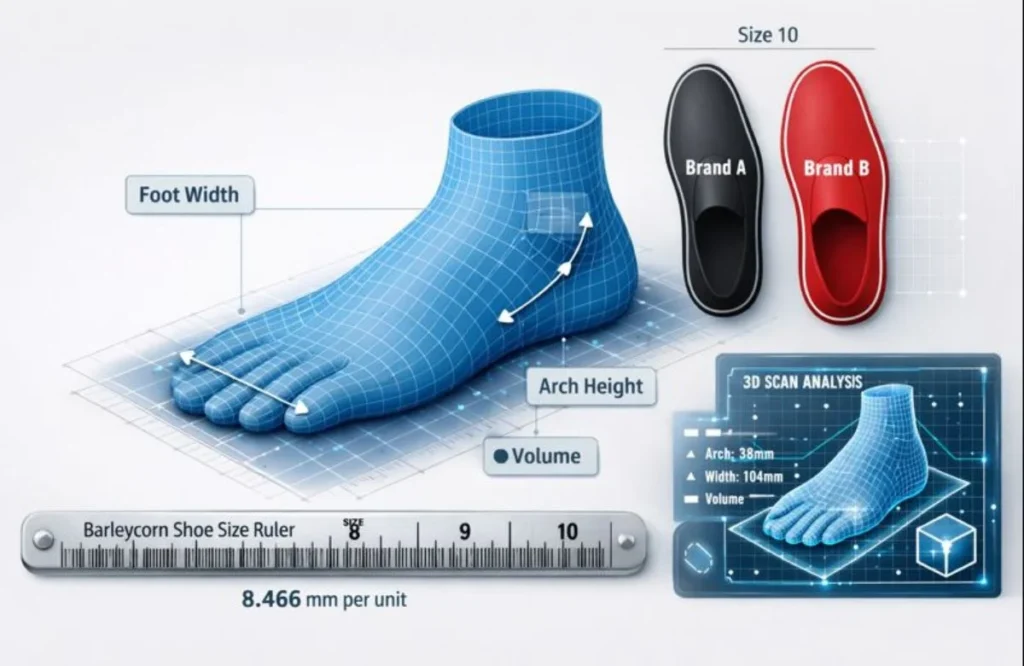
How accurate is barleycorn measurement in practice? The standard itself is precise—exactly 8.466 millimeters. But real-world application varies wildly between brands and manufacturers.
Modern 3D foot scanning technology reveals the system’s flaws. Feet are three-dimensional and change shape throughout the day. A single linear measurement can’t capture width, arch height, or volume differences.
Brand inconsistency plagues shoppers everywhere. Nike’s size 10 differs from Adidas’s size 10. Manufacturing tolerances, design choices, and target markets all affect final dimensions. The barleycorn serves as a guideline, not an absolute rule.
Digital measurement tools are changing the game. Companies now use foot scanners and AI fitting algorithms. These technologies work alongside—not against—the traditional barleycorn shoe size system.
Barleycorn Measurement Beyond Shoes
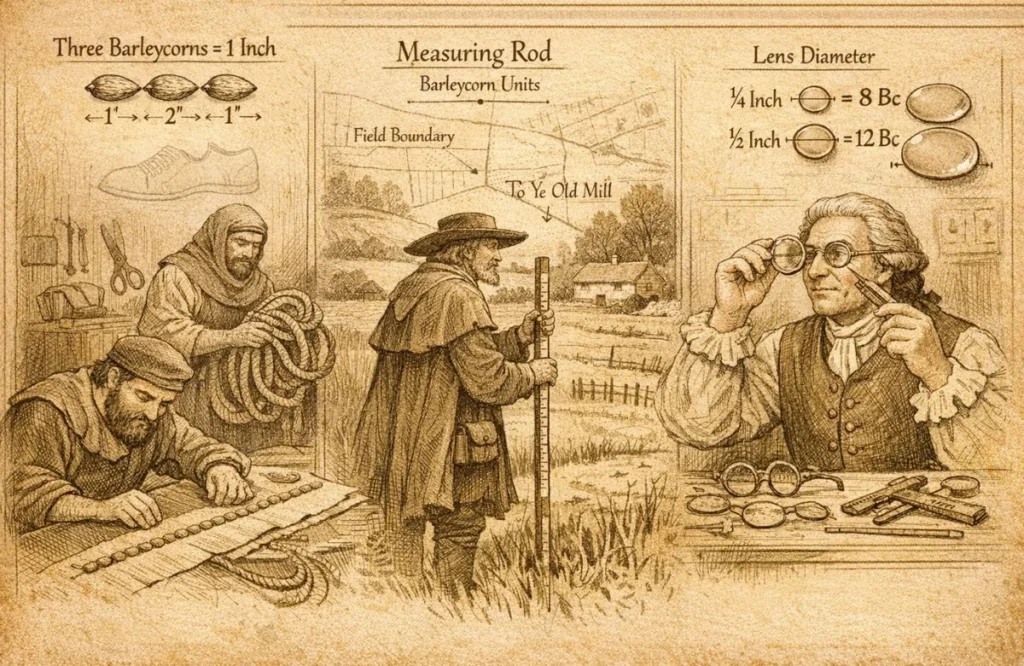
Medieval England used barleycorns for textile measurements. Cloth width and rope diameter followed the three-grains-per-inch standard. This created consistency across different craft guilds.
Land surveying sometimes employed barleycorn subdivisions. When precision mattered more than feet or yards, surveyors worked in inches divided into thirds. Property boundaries in old English deeds occasionally reference these measurements.
The optical industry briefly used barleycorns. Lens diameters and eyeglass measurements sometimes appeared in barleycorn units during the 18th and 19th centuries. This practice disappeared as specialized optical measurements emerged.
Today, barleycorn measurement survives almost exclusively in footwear. Some traditional British craftsmen still reference it for leather goods. But shoes remain its primary legacy—a testament to the system’s practical durability.
Question’s
What is the measurement of barleycorn?
One barleycorn equals exactly one-third of an inch or 8.466 millimeters. Three barleycorns laid end to end equal one inch. This ratio comes from King Edward II’s 1324 standardization decree in England.
What is a barleycorn shoe size?
A barleycorn shoe size means each full size increment equals one barleycorn in length. Going from size 8 to size 9 adds exactly 1/3 inch. This system applies to both US and UK shoe sizing standards.
Which unit of length was originally based on the size of a barleycorn?
The inch originated from barleycorn measurement. Three barleycorns equal one inch by royal decree. This made the inch one of the first standardized measurements in English history.
How accurate is the barleycorn measurement?
The barleycorn standard itself is mathematically precise at 8.466mm. However, shoe manufacturing tolerances and design variations mean actual shoes may differ by 2-5mm from the theoretical size.
What is a size 39 in Birkenstocks equivalent to?
A European size 39 in Birkenstocks equals approximately a US women’s size 8-8.5 or men’s size 6-6.5. Birkenstock uses the Paris Point system (2/3 cm per size) rather than barleycorns.
How much barley did Boaz measure?
In the Biblical Book of Ruth, Boaz gave Ruth six measures of barley. The exact amount is debated—likely six seahs (about 3/5 bushel total) or approximately 20-22 kilograms.
How much is 1 bu?
One bushel (1 bu) equals 8 gallons or 32 quarts in volume. For barley specifically, a bushel weighs approximately 48 pounds. This agricultural measurement differs entirely from the barleycorn length unit.
What does John Barleycorn mean in AA?
John Barleycorn is a personification of alcohol in British folklore. In Alcoholics Anonymous context, it symbolizes the destructive power of alcoholic beverages. The term comes from barley’s role in beer and whiskey production.
Conclusion
The barleycorn measurement system proves that good ideas endure. A simple grain became the foundation for sizing billions of shoes. Seven centuries later, we still use King Edward II’s standard.
Understanding barleycorns helps you navigate shoe shopping chaos. Whether buying American, British, or European sizes, knowing this history makes conversions easier. Next time your shoes fit perfectly, thank a medieval grain of barley.
See More: King Size Bed Measurement & Dimensions (2026)

Hi, I’m Burhan Ali, the admin and author of PD Measurement. I write simple and clear blogs about PD measurement, measuring tools, and accurate sizing guides. My goal is to help readers understand measurements easily and make better decisions with confidence.