Counter measurement is the backbone of modern industry and electronics. These devices count, measure, and track parameters like length, frequency, and events with pinpoint accuracy.
Understanding counter measurement systems helps you choose the right tool for precision work. Let’s explore what these devices are and how they deliver reliable data.
What is Counter Measurement
Counter measurement is the method of capturing physical values such as distance, frequency, speed, or event counts. It transforms motion and signals into readable numbers using mechanical parts or digital sensors.
In technical and industrial environments, accuracy is essential. Small mistakes can affect production quality, testing reliability, and overall system performance. Counter measurement replaces estimation with dependable precision.
Types of Counter Measurement Devices and Their Applications
Length Counters for Material Measurement
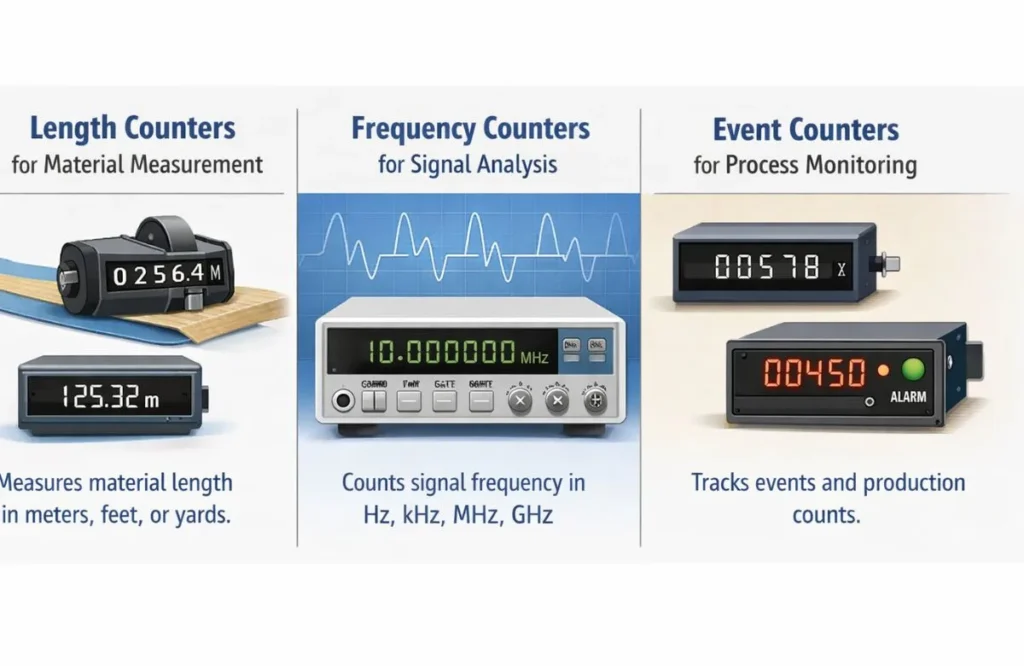
Length counter measurement uses a rotating wheel mechanism to track linear distance. As material passes over the wheel, each rotation converts to precise length readings in meters, feet, or yards.
Mechanical length counters feature a wheel that contacts the material directly. The wheel’s circumference is calibrated, so each full rotation equals a specific distance measurement.
Digital length counter measurement adds electronic sensors and displays. These systems offer unit conversion, preset alarms, and memory functions that mechanical versions cannot provide.
Frequency Counters for Electronic Signal Analysis
Frequency counter measurement captures how many times a signal cycles per second. The device counts signal edges within a precise time window, then calculates frequency using the formula: Frequency = Number of Cycles ÷ Time.
Electronic counter measurement ranges from basic models measuring 0.001 Hz to advanced units handling over 50 GHz. The time base crystal inside determines overall accuracy.
Time interval counter measurement extends beyond simple frequency. These counters measure pulse width, rise time, fall time, and phase differences between multiple signals.
Event Counters for Production and Process Monitoring
Event counter measurement tallies occurrences using electronic circuits. Each time a sensor detects an event, the counter increments by one and displays the total.
Totalizing counters accumulate counts indefinitely until manually reset. Preset counters trigger outputs or alarms when reaching a predetermined count value.
How Counter Measurement Technology Works
Counter measurement records physical values like rotations, pulses, or frequencies. It converts them into readable numbers, using either mechanical or electronic systems.
Mechanical counters use gears and wheels to move the display one step per input. Electronic counters use circuits that count signals digitally and show the result instantly.
Question’s
What is a counter measurement?
Counter measurement is a device or method that quantifies parameters like length, frequency, or events. It uses mechanical or electronic systems to provide accurate numerical data.
What is meant by counter measure?
A countermeasure is a defensive action to prevent threats, different from counter measurement devices. The terms sound similar but serve completely different purposes.
Which is measured by counter?
Counters measure length, frequency, time intervals, events, and rotational speed. The measurement type depends on the counter design and sensor configuration.
What are the countermeasures?
Countermeasures are protective actions in security contexts. While distinct from counter measurement, some systems use measurement technology to detect and quantify threats.
Conclusion
Counter measurement technology provides the precision data that modern operations demand. Understanding how these devices work helps you select the right measurement solution.
Whether mechanical or electronic, counter measurement systems deliver reliable counting and measurement capabilities. Choose based on your accuracy needs, operating environment, and measurement parameters.
Read More: Calf Measurement: Complete Guide 2026

Hi, I’m Burhan Ali, the admin and author of PD Measurement. I write simple and clear blogs about PD measurement, measuring tools, and accurate sizing guides. My goal is to help readers understand measurements easily and make better decisions with confidence.