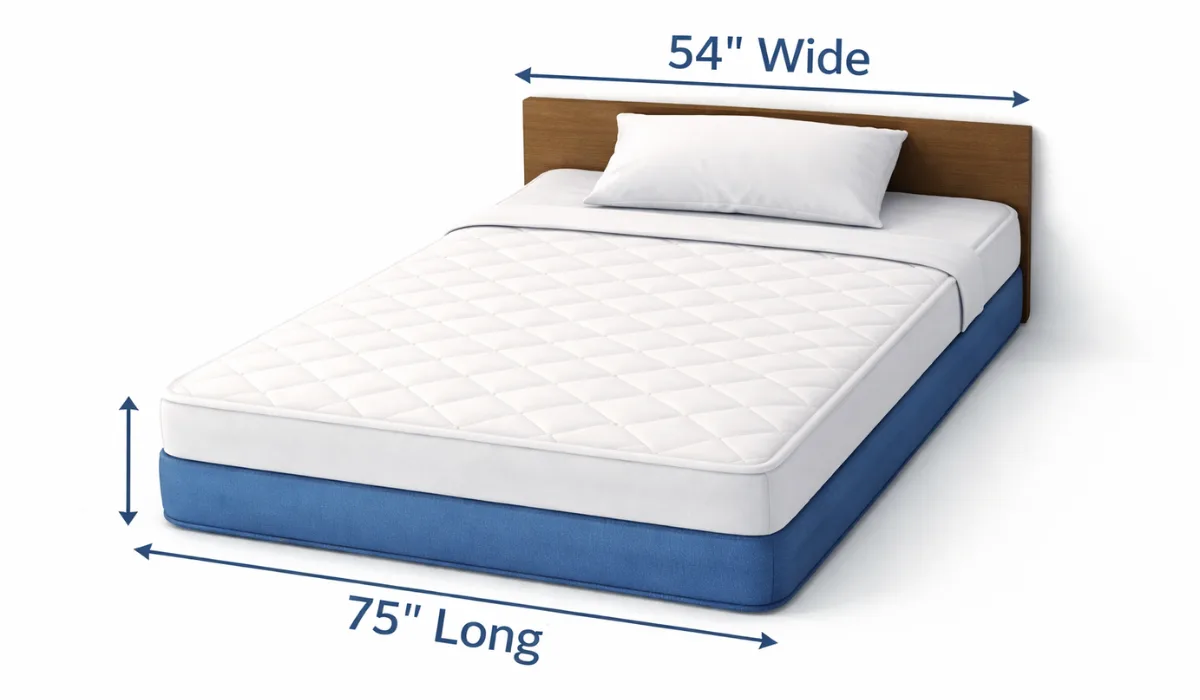
A full size bed measurement is 54 inches wide by 75 inches long. This classic bed size works great for single sleepers who want extra room to stretch out.
Many people call it a double bed, but it’s the same thing. Let’s break down everything you need to know about full bed dimensions and whether it’s the right fit for your space.
Full Size Bed Measurements
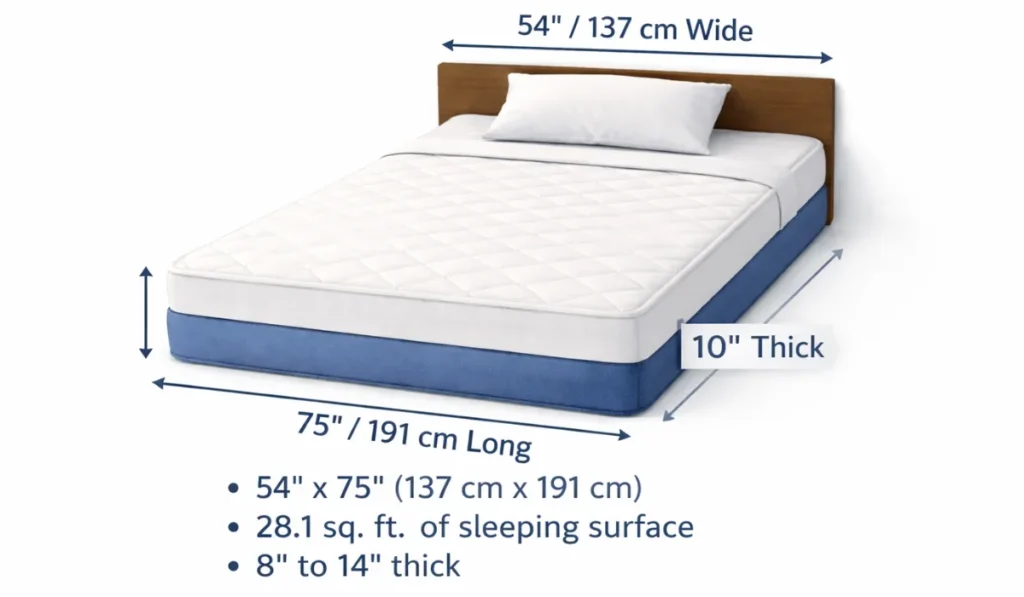
A full size bed measures exactly 54 inches wide and 75 inches long. In metric units, that’s 137 centimeters by 191 centimeters.
This gives you 28.1 square feet of sleeping surface. If two people share the bed, each person gets about 27 inches of width—roughly the same as a baby crib.
Standard full mattresses are typically 8 to 14 inches thick. Most modern foam and hybrid mattresses fall around 10 to 12 inches in height.
Full Bed Measurement Compared to Other Bed Sizes
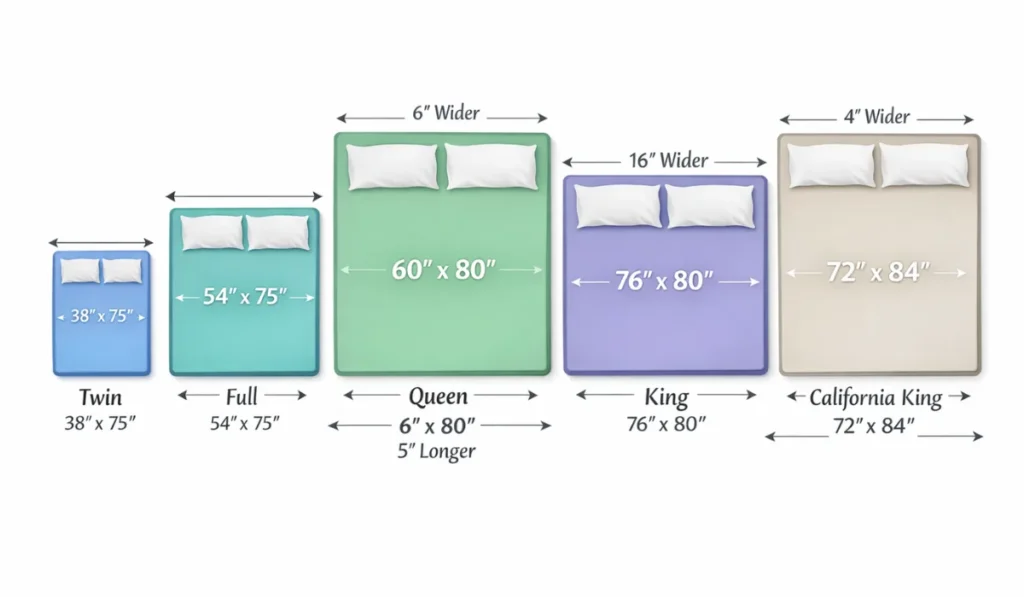
Full bed compares to other mattress sizes helps you make the right choice.
A Twin bed is 38 inches wide and 75 inches long. That means a full is 16 inches wider than a twin but the same length. A Twin XL is 38 by 80 inches, adding 5 inches to the length.
A Queen bed measures 60 inches wide by 80 inches long. It’s 6 inches wider and 5 inches longer than a full size bed. Queen beds are the most popular size in America, according to the International Sleep Products Association.
A King bed is 76 inches wide by 80 inches long. That’s 22 inches wider than a full but the same 80-inch length as a queen. A California King measures 72 by 84 inches—12 inches wider and 9 inches longer than a full.
Room Size Requirements for a Full Size Bed
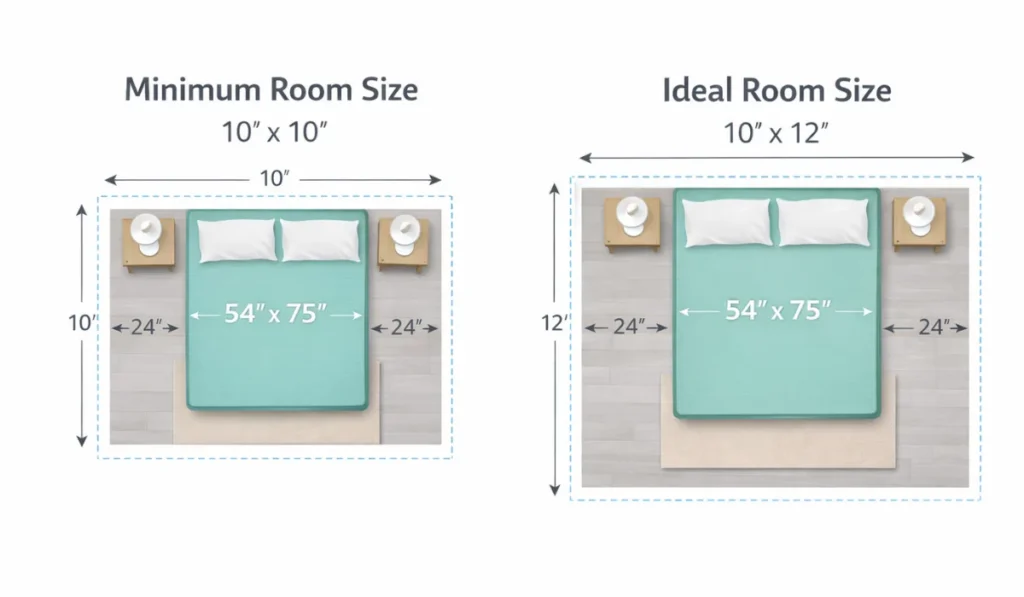
Your bedroom needs to be at least 10 feet by 10 feet to fit a full size bed comfortably. This allows basic movement around the bed.
The ideal room size is 10 feet by 12 feet or larger. This gives you 24 to 36 inches of clearance on each side for walking and placing furniture.
Interior designers recommend at least 24 inches of walking space around your bed. This prevents your room from feeling cramped and makes changing sheets easier.
Who Should Choose a Full Size Bed?
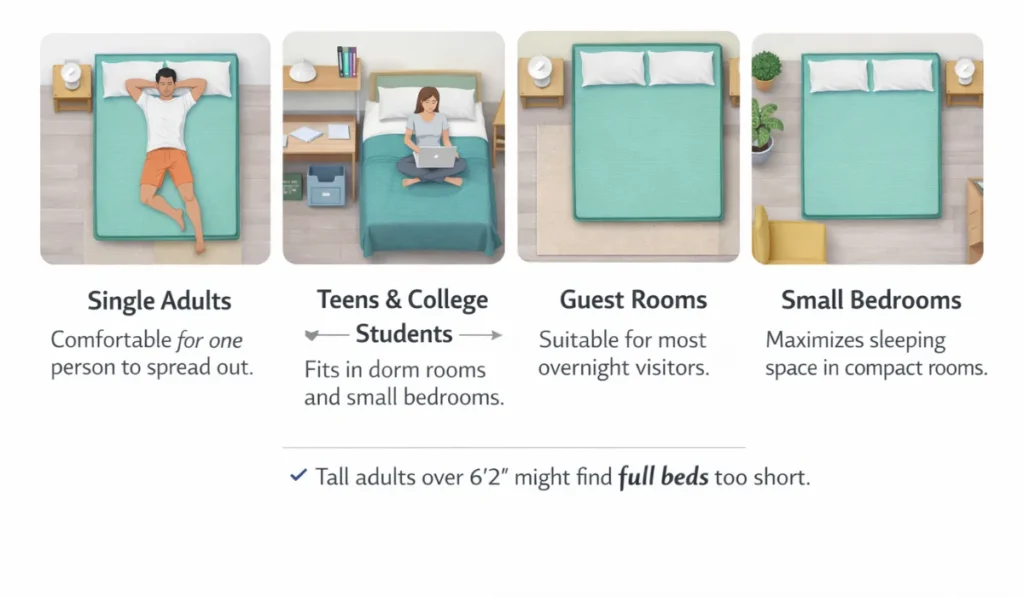
Single adults who sleep alone find full beds perfectly comfortable. You get 27 extra inches compared to a twin, giving you room to sprawl out.
Teenagers and college students benefit from the extra space. Full beds fit nicely in dorm rooms and smaller bedrooms without overwhelming the space.
Guest rooms typically use full size beds because they accommodate most overnight visitors. They’re also more budget-friendly than queen or king sizes.
Small bedrooms and apartments work best with full mattresses. You maximize sleeping space without sacrificing room for other furniture.
Tall sleepers over 6 feet 2 inches might find the 75-inch length too short. A Twin XL, Queen, or California King offers better legroom.
Full Size Bed Frames, Sheets & Accessories Measurements
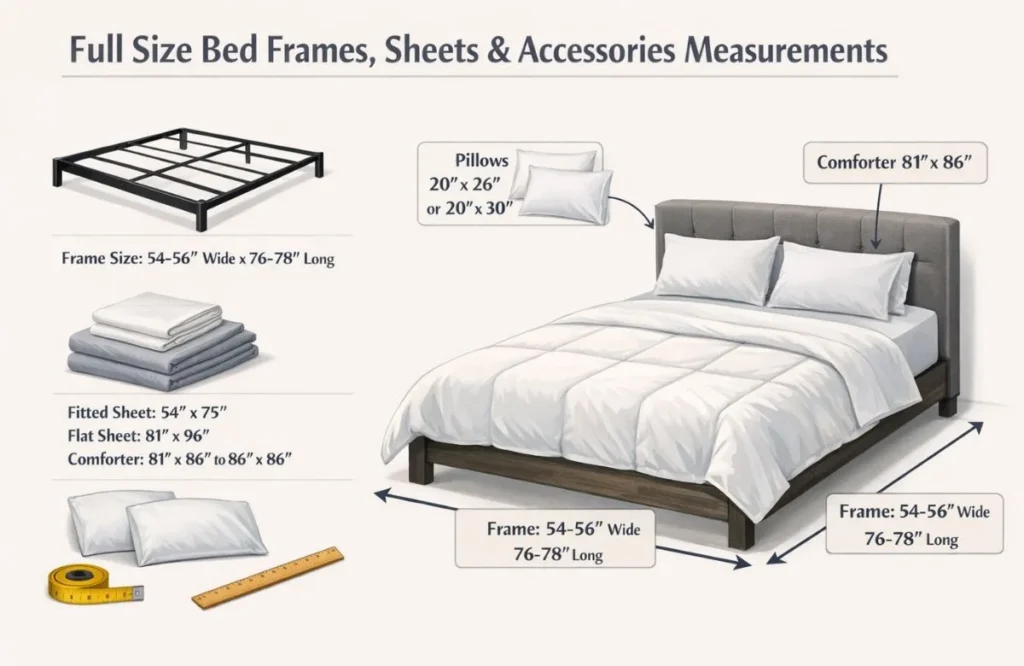
Full bed frames measure slightly larger than the mattress to provide support. Most frames are 54 to 56 inches wide and 76 to 78 inches long.
Full size fitted sheets are designed for mattresses 54 by 75 inches. They typically have pocket depths of 12 to 18 inches to accommodate different mattress heights.
Flat sheets for full beds usually measure 81 by 96 inches. This provides enough fabric to tuck under the mattress and drape over your blankets.
Comforters and duvets for full beds range from 81 by 86 inches to 86 by 86 inches. The extra width ensures coverage that drapes over the mattress edges.
Standard pillowcases are 20 by 26 inches or 20 by 30 inches. Most full beds use two standard or queen-size pillows for proper support.
Question’s
What is the actual size of a full-size bed?
A full-size bed measures exactly 54 inches wide by 75 inches long. In centimeters, that’s 137 cm by 191 cm, providing 28.1 square feet of sleeping space for comfortable rest.
What size bed is a 60 by 80?
A bed measuring 60 inches by 80 inches is a Queen size. It’s 6 inches wider and 5 inches longer than a full bed, making it better for couples or taller individuals.
Are double and full the same size?
Yes, double and full are identical—both measure 54 inches by 75 inches. The mattress industry uses these terms interchangeably, so you’re getting the exact same bed either way.
Are full-size beds being phased out?
No, full-size beds remain widely available and popular. They’re still manufactured by all major mattress brands and are ideal for single sleepers, teens, guest rooms, and small spaces. Queen sizes have grown more common for master bedrooms, but full beds continue serving specific needs effectively.
Conclusion
A full size bed measurement of 54 by 75 inches gives single sleepers plenty of room without taking over your bedroom. It’s 16 inches wider than a twin but more compact than a queen.
Choose a full bed if you sleep alone, have a smaller bedroom, or need an affordable guest room option. Make sure your room is at least 10 by 10 feet for comfortable placement. With the right measurements in mind, you’ll find a full bed that fits your space and sleep style perfectly.
Read More: Brake Pad Measurement: Safe Thickness, Chart & Tips

Hi, I’m Burhan Ali, the admin and author of PD Measurement. I write simple and clear blogs about PD measurement, measuring tools, and accurate sizing guides. My goal is to help readers understand measurements easily and make better decisions with confidence.